

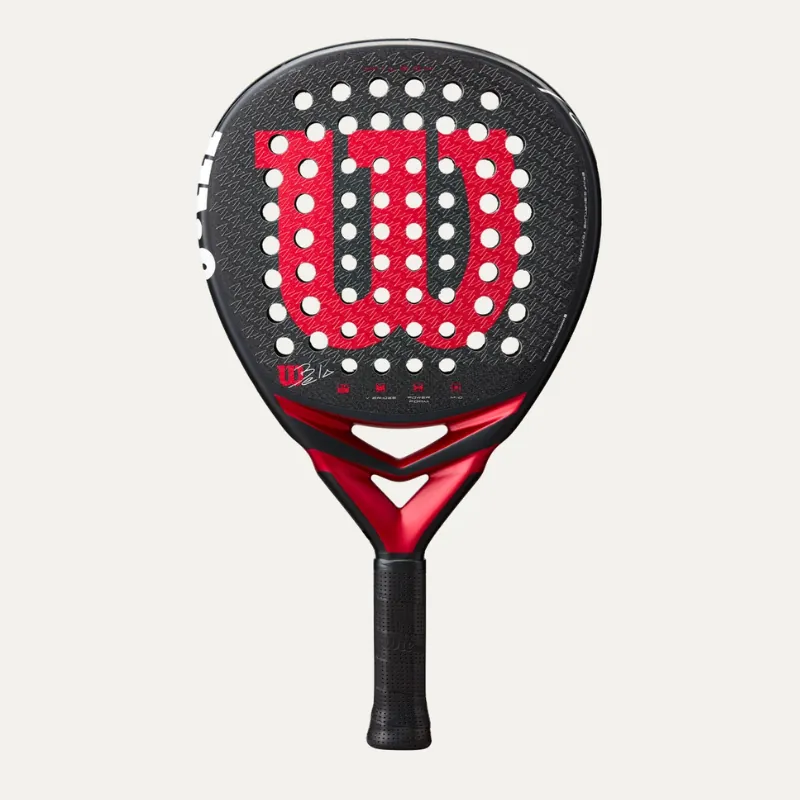
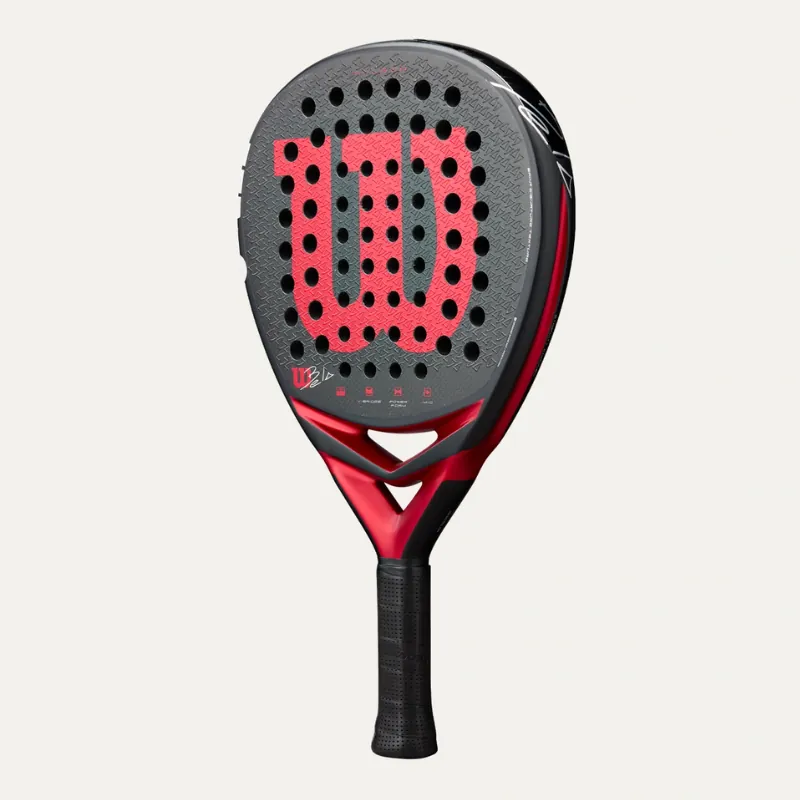
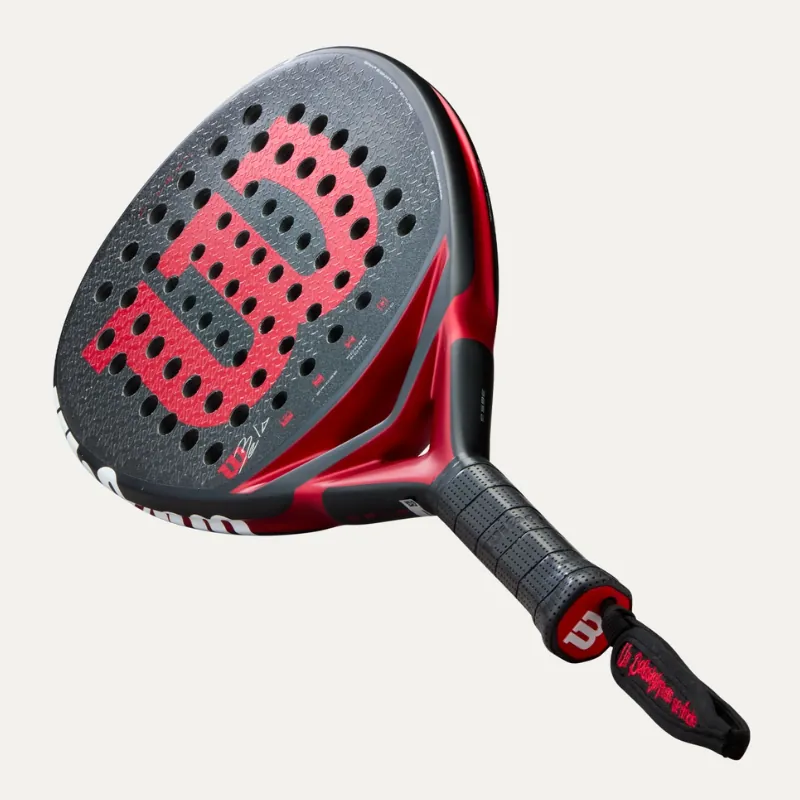
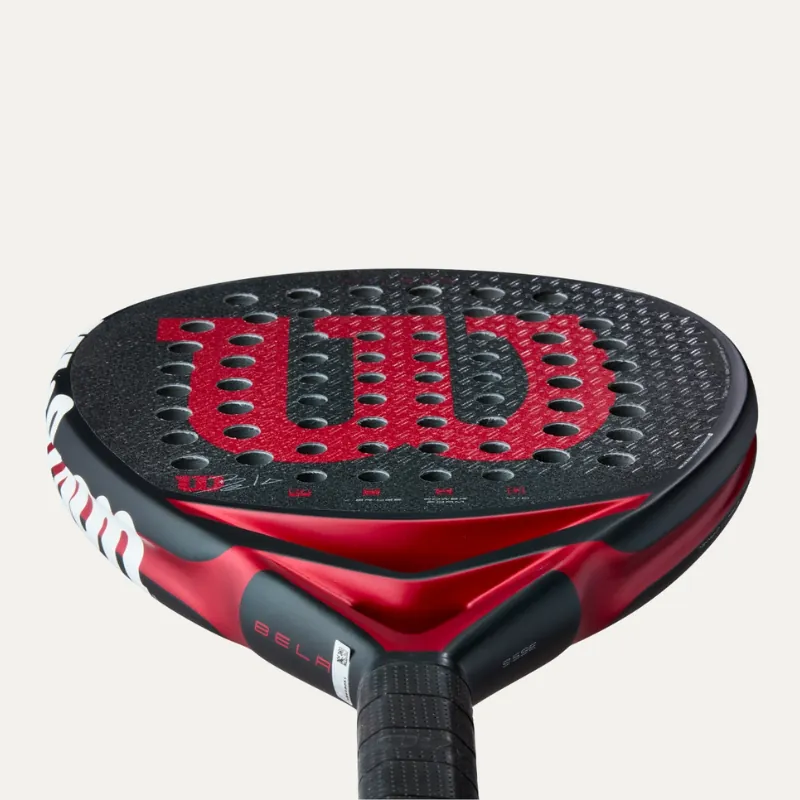

Wilson Bela V3 2025

PVP:

270,00

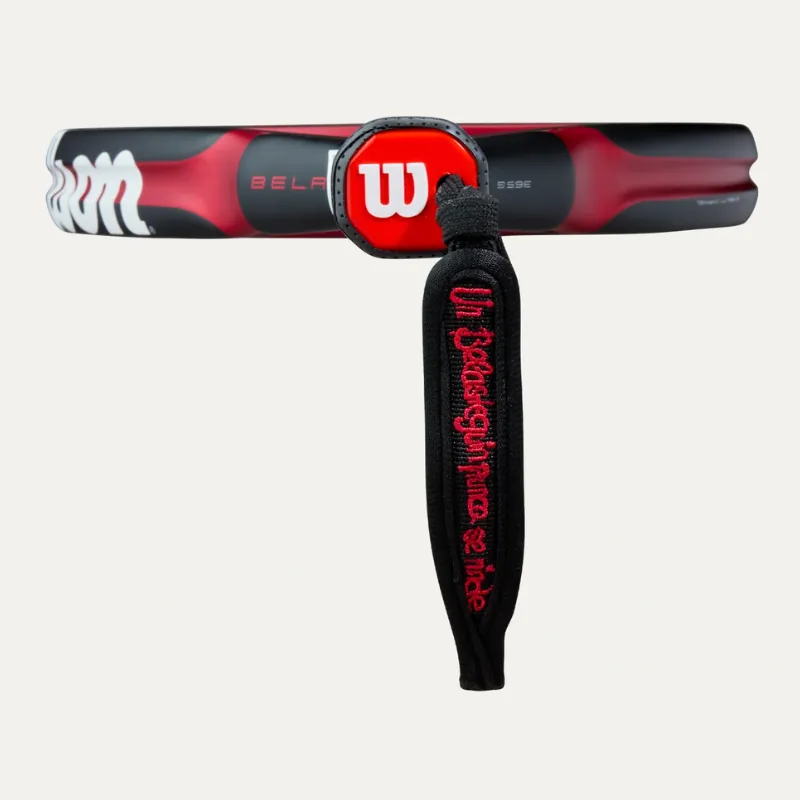
The Wilson Bela V3 2025 padel racket is a professional teardrop-shaped racket with a medium balance and competitive spirit, designed alongside Fernando Belasteguín for players seeking power, precision, spin, and stable performance in demanding matches.

FEATURES

YEAR
2025
floor-tiles
FACE
Carbon 3K
BALANCE
Medium
WEIGHT
365gr +/-
SHAPE
Teardrop
COLOR
Black, Red
TOUCH
Medium
CORE
Power FOAM
PLAYER
Men
FRAME
Carbon
LEVEL
Advanced, Professional
SURFACE
Rough
PLAYING STYLE
Versatile
PROFFESIONAL
Fernando Belasteguín
THICKNESS
38mm

review

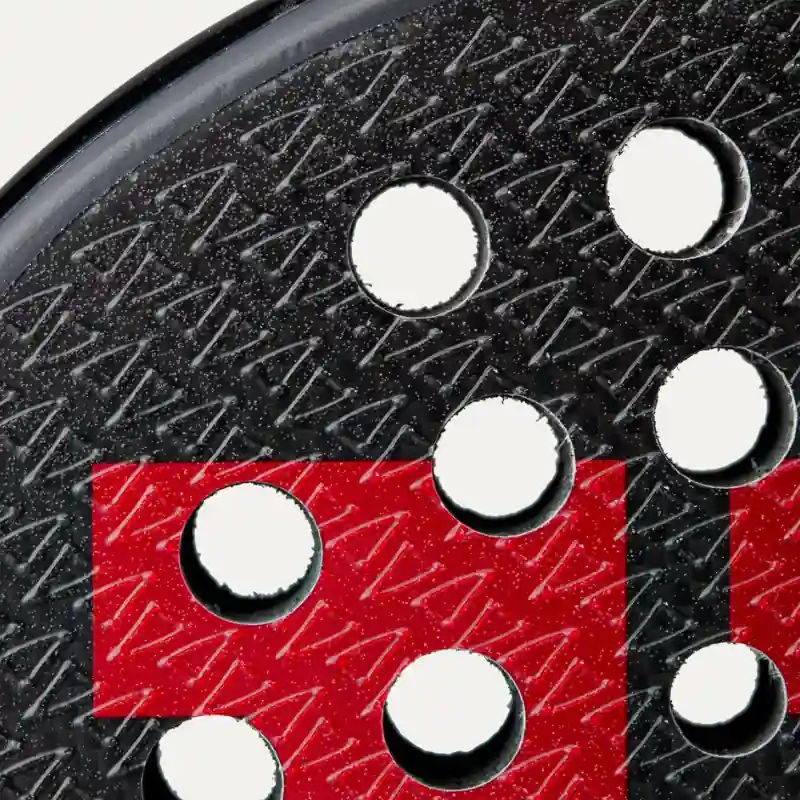
The Wilson Bela V3 2025 is a racket built for high-level competition, featuring a construction that combines 3K Carbon, a Power Foam core, and a rough Spin2 Texture surface to enhance attacking shots with spin. Its teardrop shape and medium balance make it a highly complete option for players who need reliable performance both in defense and near the net.

Within the Wilson padel rackets range, this Bela V3 stands out for belonging to Fernando Belasteguín’s collection, a line focused on performance, stability, and offensive character. It is a Professional Level racket aimed at a Men player who wants a solid, powerful, and precise tool to control the pace of the point without sacrificing control in volleys, blocks, and defensive shots.

Who is the Wilson Bela V3 2025 for?

The Wilson Bela V3 2025 is designed for advanced and professional players looking for a demanding, stable racket with excellent offensive capabilities. Its medium balance helps prevent it from being solely a power-focused racket, making it a very balanced option for players who want to dominate rallies with acceleration, changes of pace, and strong precision on technical shots.

Thanks to its Multipurpose behavior, it fits especially well with players who frequently alternate between defense and attack. The Sharp Hole Technology and Duo Grid pattern help improve ball output and control depending on the impact zone, while the Spin2 texture enhances spin on viboras, bandejas, and topspin shots. In this Wilson Bela V3 2025 review, it is clear that this is a racket for players who already have solid technique and want a firm, powerful, and precise response.

Advantages and disadvantages of the Wilson Bela V3 2025

Advantages

  • Excellent balance between power and control thanks to its teardrop shape and medium balance.
  • The 3K Carbon face provides firmness, precision, and a solid response on fast shots.
  • The Spin2 Texture surface makes it easier to generate spin on attacking and tactical shots.
  • The Duo Grid Pattern system improves power in the upper area and control in the lower part of the racket.
  • The V-Bridge technology and Stability Channel reinforce stability and provide a secure feel on impact.

Disadvantages

  • It is not the easiest option for Beginner players, as it requires solid technique to fully benefit from its performance.
  • Its firm Touch may feel less comfortable for players who prefer very soft rackets or easy ball output.
  • Although it offers good control, it is not a purely defensive racket nor specifically focused on players who prioritize absolute control.
  • It may require an adaptation period if you come from a round, soft, or low-balance racket.

Final opinion on the Wilson Bela V3 2025

The Wilson Bela V3 2025 review is highly positive when discussing a racket built for competition, confident attacking play, and maintaining a high level of precision throughout the match. Wilson has created a racket with a strong personality, clearly influenced by Fernando Belasteguín’s style: solid, stable, intense, and ready to perform in maximum-demand situations.

Its combination of Power Foam, 3K Carbon, Sharp Hole Technology, Duo Grid Pattern, and Spin2 Texture makes it a very complete racket for players seeking power without sacrificing precision. In addition, as part of the 2025 padel rackets collection, it incorporates technological improvements designed for players looking for a modern, versatile racket with real on-court performance. If you have solid technique, play with intensity, and want a balanced professional racket, the Wilson Bela V3 2025 is one of the most interesting options in the Bela lineup.

THICKNESS

The racket thickness refers to the width of the profile and is usually regulated, with a standard maximum of 38 mm. This aspect influences the stability, power and durability of the racket during play.

Rackets with greater thickness offer a more solid and stable structure, resulting in better performance on powerful shots. On the other hand, a well-balanced standard thickness allows for a good combination of control, power and maneuverability.

In practice, most modern rackets comply with the maximum allowed thickness, so the main differences usually come from the internal construction and materials rather than the thickness itself.

PROFESSIONAL PLAYER

The professional player indicates whether the racket is associated with or has been developed alongside a player from the professional circuit. This usually means it includes high-performance technologies and features, designed for a demanding level of play. However, just because a racket is used by a professional doesn’t mean it’s the best option for everyone, as many are intended for players with good technique and experience.

PLAYING STYLE

The playing style (power, control or all-round) indicates what type of game the racket is designed for based on its performance on court. Control rackets stand out for their precision, maneuverability and large sweet spot, making them ideal for players who prioritize placement and consistency in every shot. Power rackets are designed for a more aggressive style of play, offering greater hitting power and ball output on attacking shots, although they tend to be more demanding and less forgiving.

Finally, all-round rackets aim to provide a balance between control and power, making them a very versatile option for players who want to adapt to different game situations. Choosing the right style will depend on how you play and whether you prefer to control the point or finish it with power.

SURFACE

The racket surface refers to the finish of the face and can be smooth, rough or sand-textured. Smooth surfaces provide a cleaner and more consistent hit, with more natural sensations on every shot, and are common in beginner or more affordable rackets. On the other hand, rough or sand-textured surfaces are designed to enhance spin, as they increase ball grip on shots like topspin or slice, allowing for greater rotation.

This finish can be integrated directly into the material or applied as an external layer, and is increasingly common in intermediate and advanced level rackets, especially among players looking for greater control over spin and a more technical style of play.

LEVEL

The racket level (beginner, intermediate or advanced/professional) indicates the type of player it is designed for based on their experience and technique. Beginner rackets are usually more comfortable, featuring a large sweet spot, greater control and ease of use, making them ideal for learning and building confidence on court. Intermediate rackets aim to provide a balance between control and power, allowing players to progress and start defining their playing style.

Advanced or professional rackets, on the other hand, are designed for players with solid technique, offering greater precision, power and performance, but also being more demanding on each shot. Choosing the right level is key to enjoying the game and avoiding frustration, as a racket that is too demanding can slow down your progress.

FRAME

The racket frame is the structure that surrounds the entire racket and provides stiffness, stability and durability. It is usually made primarily of carbon fiber, especially in mid-range and high-end rackets, as it offers greater strength and better resistance to impacts and twisting. In more basic models, it may also include fiberglass, providing a bit more flexibility. A good frame not only improves performance but also helps extend the racket’s lifespan against impacts and regular use.

PLAYER

The player type (men, women or kids) is a general classification used by brands to adapt aspects such as weight, size and maneuverability of the racket. For example, women’s rackets are usually lighter and easier to handle, while kids’ rackets are designed to provide maximum control and comfort during the learning stage.

However, this is not a strict rule: a woman can perfectly play with a men’s racket if it suits her preferences, just as some men prefer women’s rackets because they are lighter and easier to handle. Ultimately, this classification serves as a starting guide, but what really matters is choosing a racket that matches your level, playing style and comfort on court.

CORE

The racket core is the material inside the racket and one of the most important factors in overall feel. The most commonly used material is EVA foam, a durable and resilient material that offers an excellent balance between control, power and ball output. Depending on its density, it can be softer or harder: softer EVA provides more comfort, better vibration absorption and easier ball output, while harder EVA delivers a firmer feel, greater precision and extra power on aggressive shots.

In addition, EVA foam stands out for maintaining its properties over time, resulting in a longer lifespan and more consistent performance. For this reason, it is the preferred choice in most modern rackets, especially in mid-range and high-end models.

FEEL

The racket feel refers to the sensation it provides on impact and mainly depends on the materials used in the face and core. A hard racket offers greater power and precision, as the ball rebounds less and allows for more technical control, but it requires good technique and may feel less comfortable.

On the other hand, a soft racket provides more ball output, better vibration absorption and greater comfort, making it more forgiving on off-center shots and easier to play with, especially for beginner and intermediate players. In addition, hard rackets are generally not recommended for players with elbow pain, as they absorb fewer vibrations.

Choosing one or the other will depend on the player’s level and the type of feel they are looking for on court.

COLOR

The racket color refers to the aesthetic design of the model and does not directly affect performance on court. However, it can be an important visual factor, as many brands use bold or elegant color combinations to differentiate their ranges and match each player’s style.

SHAPE

The racket shape directly influences playing style and on-court feel. The main shapes are round, teardrop and diamond: the round shape offers maximum control and a large sweet spot, the teardrop provides a balance between control and power, and the diamond is designed for offensive players seeking maximum power, with a higher sweet spot.

In addition, some brands develop hybrid or geometric shapes, combining features from different formats to deliver more balanced performance or to suit specific playing styles.

WEIGHT

The racket weight is one of the most important factors when choosing a racket, as it directly affects maneuverability, power and comfort during play. It generally ranges between 355 and 375 grams: lighter rackets offer greater control and ease of movement, while heavier ones provide more power, although they can be more physically demanding if the right weight is not chosen.

In general, women’s rackets tend to be lighter, men’s rackets slightly heavier, and kids’ rackets even lighter, adapting to the needs of each type of player.

BALANCE

El balance de la pala indica cómo se distribuye el peso a lo largo de la misma. Puede ser bajo, medio o alto, y determina en gran medida el comportamiento en pista: un balance bajo ofrece mayor control y manejabilidad, un balance medio aporta equilibrio, y un balance alto proporciona más potencia en los golpes, aunque puede resultar menos cómodo para algunos jugadores.

FACE

The racket face is the surface that comes into contact with the ball and one of the elements that most influences the feel on impact. It is usually made of carbon fiber, fiberglass or a combination of both, offering different levels of stiffness, power and control.

In the case of carbon, there are different types such as 3K, 6K, 12K or 18K, which refer to the number of filaments and largely determine the stiffness and response of the racket. It is the most commonly used material in advanced or professional-level rackets.

On the other hand, fiberglass is softer and more flexible, and is commonly found in beginner or intermediate rackets due to its greater comfort and ease of use.

YEAR

The racket year indicates the season in which the model was released. Each year, brands typically update their rackets with new versions, although in some cases models remain unchanged for two seasons.

Select at least 2 products
to compare